
Why You Should Modernize Legacy Apps Instead of Rewriting Them
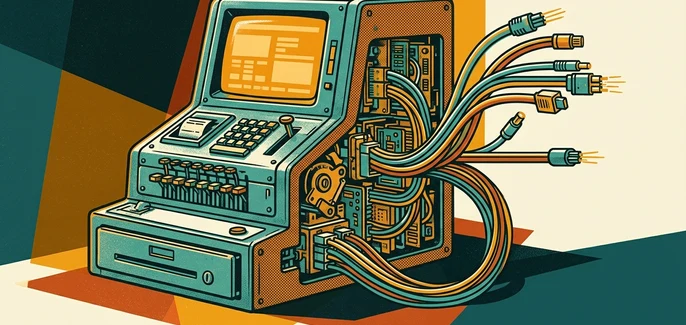
Every small business has a piece of software that everyone relies on but nobody wants to touch. It might be an internal inventory manager, a custom billing engine, or a desktop-bound database tool. Because these systems look dated and are built on ancient stacks, the temptation to order a complete rewrite in a modern framework is incredibly strong.
However, throwing away functioning legacy code is one of the most common ways small engineering teams burn through their runway. Decades-old software contains thousands of tiny, undocumented business rules and edge cases that have been patched and perfected over years of real-world use. When you rewrite from scratch, you have to rediscover every single one of those bugs the hard way. As the creators of the FoxPro revival project recently noted, rewriting a 20-year-old business application is often how you lose the business.
You do not need to rewrite your legacy apps to make them reliable, secure, and modern. This guide outlines a step-by-step migration and wrapping framework to keep your core business logic running safely while updating the infrastructure around it.
The Core Strategy: Wrap, Don't Rewrite
Instead of starting from a blank text editor, treat your legacy system as a stable, black-box utility. Your goal is to isolate the legacy application, expose its capabilities through modern interfaces, and gradually migrate or extend its features without touching the delicate core logic.
This approach minimizes operational risk. If a new frontend or integration fails, your core business data and processing engine remain completely unaffected and operational.
A Step-by-Step Modernization Framework
For lean teams, a gradual modernization pipeline is highly repeatable and keeps deployment risks low. Follow these four steps to safely upgrade your legacy business software:
- Containerize the Environment: Package the legacy runtime, dependencies, and application files into a lightweight container (such as Docker). This isolates the application from modern host operating system updates that might otherwise break it, ensuring it runs identically in staging and production.
- Build a Modern API Wrapper: Create a lightweight service in a modern language (like Go or Node.js) that runs alongside your legacy application. Have this wrapper interact with the legacy app via command-line arguments, file exchanges, or direct database queries, exposing these interactions as clean, secure REST or gRPC endpoints.
- Implement Centralized Logging and Monitoring: Route the legacy application's standard outputs and error logs to a modern observability tool. You cannot safely manage what you cannot see, and centralizing these logs is critical before exposing the system to new integrations.
- Decouple the User Interface: Build a modern, web-based frontend that communicates exclusively with your new API wrapper. This instantly improves the user experience for your team or customers without risking the integrity of the underlying data-processing engine.
Who Should Modernize Now (and Who Should Wait)
If your legacy application is running on unsupported hardware, lacks basic security compliance, or prevents you from integrating with modern APIs, you must act now. Wrapping the application allows you to patch security vulnerabilities at the network layer without rewriting the core code.
However, if your legacy application is running smoothly on a stable local network, has no external dependencies, and your team experiences zero friction using it daily, leave it alone. The risk of introducing regressions during a modernization project always outweighs the aesthetic benefit of a newer stack.
Risk Mitigation: Watch Your Data Integrity
The primary risk when wrapping legacy systems is data corruption caused by concurrent writes. If your new API wrapper and the original legacy interface write to the same database simultaneously, you risk corrupting your records. Always designate a single source of truth and enforce strict database locking or queueing mechanisms within your API wrapper.
The Operator's Takeaway
At Presence Digital, we believe that maintainable, stable workflows beat chasing the latest tech stack every time. You do not need to throw away your oldest, most reliable software to stay competitive. By wrapping your legacy applications in modern interfaces, you preserve the valuable business logic that keeps your company running while gaining the flexibility, security, and scalability of modern cloud infrastructure.
Your next step: Identify the single most critical legacy tool in your business and document how data flows in and out of it today. That flow is the blueprint for your first API wrapper.