
How to Adapt Your Dev Workflows for Agent-Scale Codebases
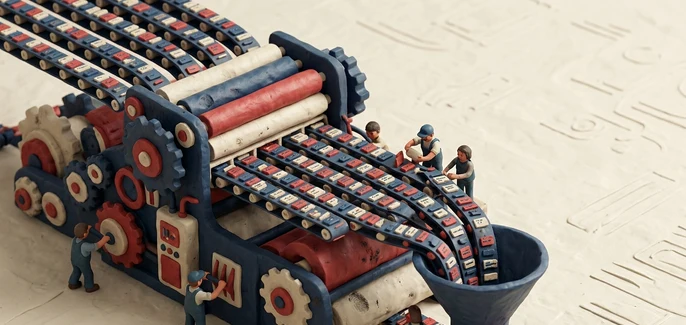
Your development workflow is about to face an unprecedented volume of changes. As GitHub rebuilds its core Git infrastructure to support what it calls "agent-scale software development," the traditional way small teams write, review, and merge code is shifting. When autonomous agents can write code, open pull requests, and attempt to fix bugs in seconds, the human developer's role moves from writer to director and critical reviewer.
For small, lean teams, this shift presents a massive bottleneck. If your team relies on manual, ad-hoc code reviews and lacks strict repository guardrails, the sheer volume of AI-generated code will quickly overwhelm your engineers, introducing subtle bugs and architectural drift.
What Changed: The Rise of Agent-Scale Git
GitHub has openly acknowledged that its infrastructure must evolve to support automated agents that generate Git operations at a frequency and scale no human team ever could. Alongside this infrastructure shift, the core skills required of developers are changing. Technical judgment, the ability to direct AI agents, and critical code review are replacing raw syntax writing as the primary measures of developer value.
For a small business or lean startup, this means you can no longer treat AI code generation as a simple autocomplete tool. Instead, you must treat AI agents as highly productive, junior developers who work 24/7, write code with high confidence but inconsistent accuracy, and require strict, automated boundaries to keep from breaking production.
The Core Problem: Review Bottlenecks and Code Drift
When teams begin using agentic tools without changing their workflows, they quickly hit three major friction points:
- The Review Bottleneck: An agent can generate five complex pull requests in ten minutes. If a senior developer has to manually read every line to find subtle logical flaws, the agent actually decreases overall team velocity.
- Architectural Drift: AI models excel at solving isolated problems but lack a holistic view of your system's architecture. Over time, agent-written code introduces redundant patterns and inconsistent styling.
- Silent Regressions: Agents are highly persuasive. They write clean-looking code and plausible commit messages that can easily pass a superficial human review while harboring deep runtime bugs.
What to Do Next: A 4-Step Action Plan
To prepare your team for agent-scale development without sacrificing code quality or stability, you need to transition from a manual review process to an automated, defensive workflow.
- Enforce Strict Repository Guardrails: Protect your main branch. Require all pull requests—whether opened by humans or agents—to pass a mandatory suite of automated checks. Block merges on failing tests, linting errors, or unresolved review threads.
- Implement High-Coverage Integration Testing: Because agents struggle with systemic context, unit tests are no longer enough. Invest in end-to-end and integration tests that verify critical user journeys. If an agent changes an API contract, your integration suite must catch it before a human ever looks at the code.
- Establish an "Agent Sandbox" Branching Strategy: Do not allow agents to open pull requests directly against your main development branch. Route all agent-initiated tasks to a dedicated staging branch where automated test suites run in isolation.
- Shift Human Effort to System Architecture and Prompt Engineering: Train your team to focus on system design, interface boundaries, and writing precise, unambiguous specifications. At Presence Digital, we have found that the most successful engineering teams spend more time defining the "what" and "why" in their documentation, leaving the "how" to highly constrained automated tools.
Who Should Act Now (and Who Should Wait)
If your team is already using AI coding assistants or exploring autonomous agents to handle bug backlogs, you must implement these guardrails immediately. Waiting will only accumulate technical debt that becomes increasingly expensive to untangle.
However, if your codebase lacks basic automated testing, do not adopt autonomous agents yet. Introducing high-volume code generation to a repository without automated test coverage is a recipe for rapid system failure. Focus first on building your testing baseline.
The ultimate risk of the agentic era is not that AI will replace developers, but that unprepared teams will drown in a sea of low-quality, unmaintainable code. By establishing rigorous automated guardrails today, you can leverage the speed of AI agents while keeping your systems clean, stable, and maintainable.
Newsletter
New articles, in your inbox
One email when we publish. No digests and no product pitches. Unsubscribe any time. Privacy policy