
How to Review AI-Generated Code Without Losing Judgement
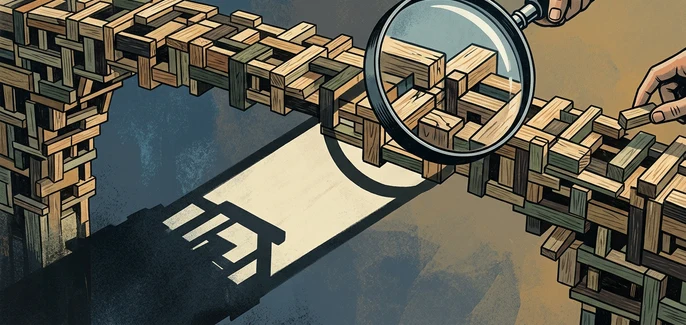
The code can look tidy, the tests can pass, and you can still be unsure what you are about to merge. That is the uncomfortable shift in AI-assisted development: producing software is getting easier, but staying responsible for what it does is not.
The idea of cognitive surrender gives this problem a useful name. I run an AI engineering studio and use agents daily, and I take the core idea seriously: cognitive offloading can help, but deferral and surrender quietly weaken our ability to judge the work. The aim is not to avoid agents. It is to use them without handing over our understanding.
The bottleneck has moved from writing to verification
In a conventional workflow, engineers spend substantial time implementing a solution. With an agent, much of that implementation can happen quickly. The scarce resource becomes the attention needed to decide whether the result solves the right problem, respects the constraints and can be maintained.
That changes what a good review looks like. Reading every generated line is not always the best use of time. I want to understand the evidence, the important decisions and the limits of the checks. A green test suite is useful evidence, but it is not proof of correctness: the tests may share the implementation’s mistaken assumptions, or fail to cover an important case.
I think of it as a progression from cognitive offloading, where we delegate execution but retain ownership, through cognitive deferral, where we start treating the agent’s answer as the default, to cognitive surrender, where we approve without really understanding. It is gradual. Careful review can turn into a quick skim, then reliance on an agent’s summary.
The cost is comprehension debt: the codebase may still look healthy while the team’s ability to explain and change it erodes. I also find intent debt a useful warning. If the request was vague, the agent may fill in the blanks confidently, leaving us with a polished implementation of a requirement we never properly agreed.
Write your own brief before you delegate
Before I prompt an agent on meaningful work, I write down my own view of the problem. It can be brief and imperfect. The point is to have an independent hypothesis, rather than letting the first plausible answer set the direction.
A useful brief names the user or process affected, the desired outcome, constraints, what is out of scope and how we will recognise success. For example, rather than asking an agent to “improve invoice handling”, specify which change is needed, which existing rules must remain unchanged and what observable result would count as done. If those details are still unclear, ask the agent to interview you or identify open questions before it implements anything.
This is not paperwork for its own sake. Clear intent gives you something to compare the output against. It also makes omissions visible: did the agent change scope, assume a business rule, introduce an unnecessary abstraction or alter an edge case? Those decisions can matter more than whether an individual function is neatly written.
I ask the agent to list significant decisions, assumptions and alternatives it considered. Then I challenge the ones that affect behaviour, data or future maintenance. A fresh review context can help find missed issues, but it does not transfer accountability to the reviewer agent.
A practical review loop for agent-built changes
For a meaningful change, I use this sequence. It keeps implementation fast without letting the review become an afterthought.
Set the intent. Write the problem, constraints, acceptance criteria and a short hypothesis about the solution. Note what must not change.
Delegate a bounded task. Ask the agent to implement within that scope. Have it report files changed, assumptions made and decisions that need human judgement.
Check the evidence. Run relevant automated checks, then inspect their actual results. Where the change affects a user flow, examine the behaviour directly; where it affects a system boundary, inspect the relevant logs or traces. Ask what the checks do not cover.
Challenge decisions, not just code. Compare the implementation with your brief. Look for scope drift, hidden assumptions, edge-case changes and complexity that is not justified. A separate critique can offer another perspective, not a verdict.
Own the merge. Before approval, explain why the approach is appropriate, what remains uncertain and how you would maintain it. If you cannot, pause and investigate rather than relying on a confident summary.
Use these three questions on every AI-generated pull request: Can I explain why this works? Can I explain what the tests do not prove? Would I be comfortable maintaining it six months from now? A no is a prompt for more review, not a failure to keep pace.
Keep the review load within human limits
Running several agents in parallel can create an orchestration tax: the gap between the volume of work they produce and the work you can responsibly inspect. One agent producing a feature, another a refactor and another tests may sound efficient. But each output still needs a coherent review. When work arrives faster than you can understand it, the queue grows and approval risks becoming hope disguised as process.
Set the amount of parallel work by review capacity, not by how many agents are available. Keep tasks small enough to assess, and finish or pause work before adding more output to an already unreviewed pile. This is especially important when changes touch business rules, security boundaries, important data or behaviour that is difficult to reverse.
There is a deeper limit, too. The paradox of supervision points to the fact that supervising systems depends on skills that excessive delegation can weaken. Better models may help detect technical mistakes, but they cannot take ownership of what should be built, which trade-offs are acceptable or who bears the consequences. I make time to reason through some problems without an agent so that the judgement needed for review does not become rusty.
Senior engineers adopting agents should act now: define review expectations, make assumptions visible and keep output volume within the team’s capacity to verify. Teams with unclear requirements or no reliable way to check important behaviour should wait before scaling agent throughput; first establish what good evidence looks like. The limitation is simple: no checklist or second agent can guarantee correctness, and deeper review takes time. That time is part of building safely, not a sign that automation has failed.
My takeaway for operators and builders is simple: delegate execution, not understanding. You can delegate the work, but not the accountability. On your next AI-generated pull request, write down your own hypothesis before reviewing the agent’s answer.
Newsletter
New articles, in your inbox
One email when we publish. No digests and no product pitches. Unsubscribe any time. Privacy policy