
Routing Gateways vs. Durable Execution: Stabilize Brittle AI Agents
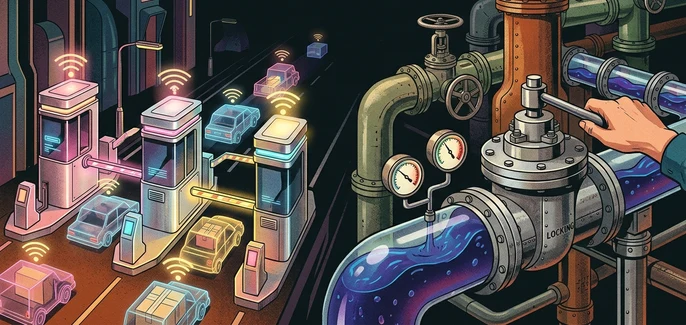
AI agents are notoriously fragile and expensive. A single unoptimized loop can rack up hundreds of dollars in API fees by sending simple tasks to frontier models. Worse, a minor network hiccup or rate limit can kill a multi-step agent workflow halfway through, leaving your customer database, billing system, or CRM in a chaotic, half-updated state.
As teams move from simple chatbots to autonomous agents, the engineering challenge has shifted from writing better prompts to building resilient infrastructure. Two distinct architectural patterns have emerged to solve these problems: AI Routing Gateways and Durable Execution Engines. Understanding when to use which is the key to building production-ready automation without blowing your budget.
The Two Sides of the Agent Infrastructure Problem
To build reliable agents, you must solve two distinct problems: cost-efficiency at the API level and execution resilience at the code level. Recent industry developments highlight how platforms are rushing to solve these exact pain points.
Cloudflare recently introduced an Auto Router to its AI Gateway, which evaluates request complexity at the edge to route tasks to the most cost-effective model automatically. At the same time, durable execution startup Restate secured $20M in funding to tackle the "plumbing" work behind AI agents, ensuring that distributed, multi-step agent steps run to completion even if a server crashes mid-task.
These tools represent two different approaches to stabilizing your AI stack. Let's compare how they work and where they fit into your workflow.
Tool Comparison: Gateways vs. Durable Execution
1. AI Routing Gateways (e.g., Cloudflare AI Gateway)
AI Gateways sit between your application code and your LLM providers. They act as a smart proxy, intercepting outgoing API calls to optimize cost, latency, and reliability.
- Core Capability: Dynamic model routing, caching, rate-limiting, and unified logging.
- How it works: Instead of hardcoding a call to an expensive model like GPT-4, your app calls the gateway. The gateway's classifier determines if a cheaper model (like Llama 3) can handle the request, routing it accordingly.
- Best for: Reducing raw API spend, preventing provider lock-in, and gathering unified analytics on LLM usage.
- What it doesn't solve: It cannot save a multi-step workflow if your application server crashes or if an external API goes down for five minutes.
2. Durable Execution Engines (e.g., Restate, Temporal)
Durable execution engines sit at the application layer. They ensure that your code’s state is automatically checkpointed, allowing complex, multi-step workflows to resume exactly where they left off after a failure.
- Core Capability: Resilient state management, automatic retries with backoff, and distributed transaction coordination.
- How it works: You write your agentic steps as a durable virtual object or workflow. If step three of an agent's task fails due to a third-party API timeout, the engine pauses, preserves the state, and retries step three without restarting the entire sequence.
- Best for: Multi-step agents that interact with databases, send emails, process payments, or run long-running background loops.
- What it doesn't solve: It does not optimize your LLM prompts or automatically reduce your token costs.
Action Plan: How to Build a Resilient Agent Stack
For lean teams, trying to implement both architectures simultaneously can lead to over-engineering. Follow this sequential plan to stabilize your workflows without adding unnecessary complexity.
- Audit your agent touchpoints: Categorize your AI tasks. Identify which tasks are simple, single-turn requests (e.g., summarizing an incoming email) and which are multi-step, stateful processes (e.g., extracting data, updating a CRM, and generating a contract).
- Deploy a gateway first for quick wins: For your single-turn tasks, route your API calls through an AI Gateway. Configure basic caching for repeated queries and enable dynamic routing to automatically shift simple tasks to cheaper, open-source models.
- Isolate multi-step agents into durable functions: For complex workflows where failure means data corruption or broken user experiences, migrate the execution logic to a durable execution tool like Restate. Ensure each external API call (including LLM requests) is wrapped in a durable step.
- Implement circuit breakers and fallbacks: Set strict timeout limits on your gateway and define clear fallback models (e.g., if your primary model rate-limits, fall back to a local or alternative provider instantly).
Who Should Act Now, Who Should Wait, and the Risks
Who should act now: Founders and product leads running public-facing agents, automated billing pipelines, or multi-step integrations that touch production databases. If an unhandled exception in your agent code can cause duplicate charges or lost data, you need durable execution today.
Who should wait: Internal teams using AI solely for ad-hoc assistance, drafting internal content, or running manual, human-triggered scripts. Standard try-catch blocks and basic logging are sufficient for these low-risk operations.
Risks and limitations: Introducing durable execution frameworks adds architectural overhead. Your developers will need to learn how to write deterministic code and manage state serialization. Start small by isolating your most fragile background job before refactoring your entire codebase.
Takeaway for Builders
Resilient AI automation is not about finding a smarter model; it is about building a sturdier pipe. Use routing gateways to keep your API costs predictable, and leverage durable execution to ensure your agentic workflows never break silently in the dark. If you need help designing a maintainable, high-uptime automation pipeline for your business, Presence Digital can help you design and deploy clean, cost-effective AI engineering architectures.